
Share via:
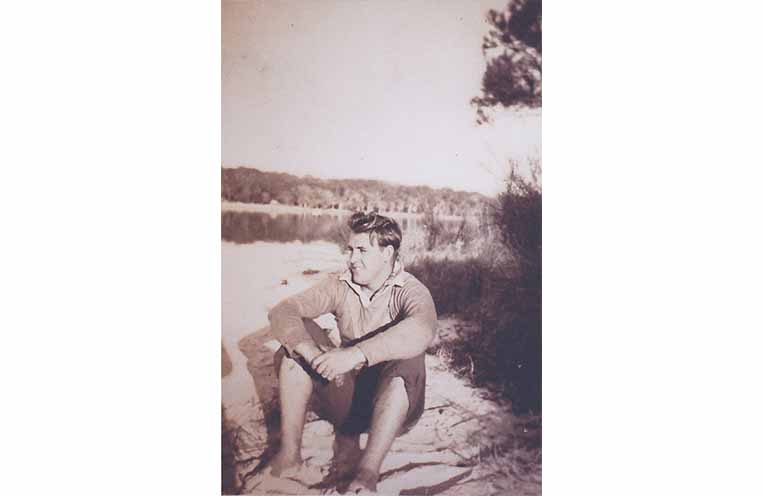
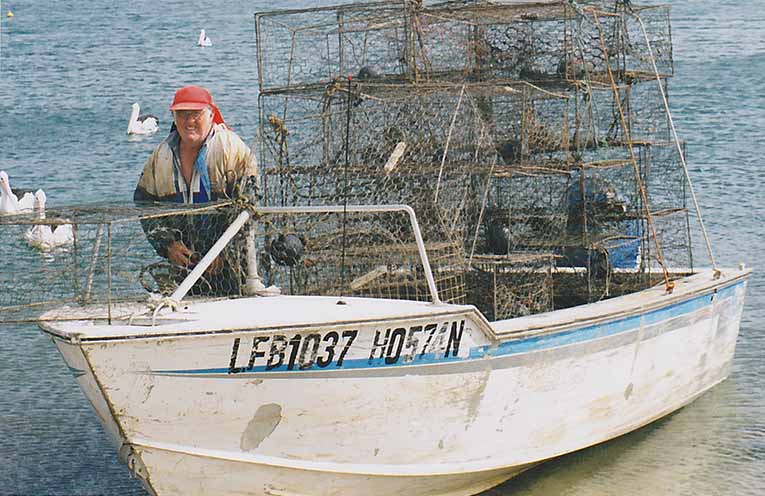
THERE were two fishermen by the name of “Westy Davis”.
“Old Westy”, Alfred George, was born in Nelson Bay in 1890, enlisted in the First A.I.F in 1915 and was a member of the first group to be sent overseas.
Old Westy served with distinction before being wounded in action, returning to Australia on board the Karmala.
In 1920 he married Elizabeth Pedelty, and the couple had six children.
The eldest, Richard was the skipper on the old Lugerina and the Koondaloo, the punts that crossed the Hunter River from Stockton to Newcastle.
When they stopped running in Newcastle, both punts, along with the Sydney vessel, Showboat, were towed up north, but struck bad weather off Treachery Beach at South West Rocks.
All three were washed ashore where they remain to this day, rusting in the sand.
Bill, Reece, Mary and Margaret followed before the youngest, Keith, the next “Westy”, was born in 1934.
With still plenty of fight in him, Old Westy re-enlisted in the Forces in 1940 at the age of 50 years and 2 months and was later discharged medically unfit. He died in 1959.
Interesting to note that commercial fishermen were not expected to go to war, although most chose to go. Their contribution to the war effort was seen as providing food.
Ron ‘Tekka’ Tarrant remembers Old Westy’s army service with a smile. Old Westy Davis was in the Army with him and Cec Bagnall.
They were down at Fort Scratchley in Newcastle, but Old Westy got caught AWL in Hunter Street, walking along with his boots slung over his shoulder.
His punishment was to be transferred.
“Whatever you do,” pleaded Old Westy, “don’t send me to that bloody place they call Tomaree at the entrance to Port Stephens. Don’t send me there. I won’t go”.
“You’ll go where we tell you,” said the commanding officer. He’d made his decision: “You are being transferred to Tomaree.”
According to Tekka, he was never there.
“He was up the Myall prawning. He’d rest his gun on the sentry box, take off his boots and head up into the Myall with all the fishermen.”
When Old Westy hit Shoal Bay beach on his return, he was in more strife as the replacement guard intended to arrest him at gunpoint.
Old Westy waded ashore with a basket of freshly cooked Myall prawns. “Don’t worry about it mate,” he said. “I’ve got all these for the boss.”
“Free to pass,” declared the sentry.
“Young Westy”, Keith Alfred Davis, started fishing at an early age, literally following in his father’s footsteps after losing his mother at the age of 10.
The boy lived in his father’s shadow and began learning the fishermen’s secrets early in life.
Young Keith wasn’t entirely convinced that he could be a fisherman, so he decided to work at the Masonite factory. After three months, there was no doubt in his mind – he was going to be a fisherman.
Young Westy married Sue Holbert, and they made a great team.
After speaking to all the old commercial fishermen from around the area, one of the few constants is that Young Westy was considered to be the undisputed number one crabber in the port.
Anyone can catch a crab, but when it comes to making a good living over many years, it takes far more than a hit-and-miss approach.
Westy knew from experience the seasonal movements of the crabs, their reaction to changes in the wind and water temperature – even their habits and behavioural patterns. Some reckon that he knew every crab by name.
He would set his mud crab traps in creeks and salt water drains that others would consider to be out of reach or too difficult.
There is no doubting the words of long-time fishing partner Trevor Holbert: “He was the ‘King of the Crabs’: the best crabber in the port, black crabs or blue, was young Westy,” he said.
“He would go to extraordinary lengths to catch crabs.
“‘The Crab Man’” had a chainsaw in the boat and he would motor way up into the narrowest of feeder streams when they were little more than a drain flowing into the main streams.
“He would saw back the branches hanging across the creeks so that he could get further up to set his traps, many times in less than a metre of water.”
’Radium’, licensed LFB No 1887, was his first dinghy, named because she was dearer than radium.
The original timber ‘Radium’ was torn apart in the big seas in 1974 when the Signa came ashore.
It was May and the boat was pulled up high and dry at Hawks Nest Beach and tied to a tree where it was considered to be safe from the elements.
The huge seas tore the stem out of her and she was never repaired. The boat’s name was retained for the fibreglass dinghy that followed.
Brenolli was named after Keith’s daughter Brenda and Sue’s mum, Olive. A little trawler that worked the lakes but was unsuitable for what Westy really wanted to do – chase crabs.
He didn’t want a boat that swung on an anchor.
“I want a boat that is going to come home on the trailer every night and not have to worry about her swinging out there in a gale,” he said.
Westy’s first crab boat was Thumper, an old Hercules DeHavilland that made a distinctive thumping sound as it ploughed into the waves, built up by the wind when it picked up in the port.
Thumper was poorly designed for what Westy was doing, so it was time for a boat more suitable for crabbing.
The result was a super crab boat, a quarter-plate aluminium Stingray built to Westy’s specific crabbing needs and designed by a company in Wacol, Queensland.
The company was not real keen to alter the shape of their regular boat design. However, Westy’s boat was to be for a purpose other than fishing, and he insisted the sides be lowered as their original was too “high wooded” (high sided), and was wide enough to accommodate two crab traps side by side.
The new owner finally got all that he asked for except for one detail. The company insisted that the new boat be painted – a waste of time and money, in Westy’s opinion.
Working in the new boat, Westy’s wife Sue heard the same thumping sound and said: “You might as well call this one Thumper too”.
And, so it was named, ‘Thumper Too’.
By John ‘Stinker’ CLARKE
You can help your local paper.
Make a small once-off, or (if you can) a regular donation.
We are an independent family owned business and our newspapers are free to collect and our news stories are free online.
Help support us into the future.
Share via: