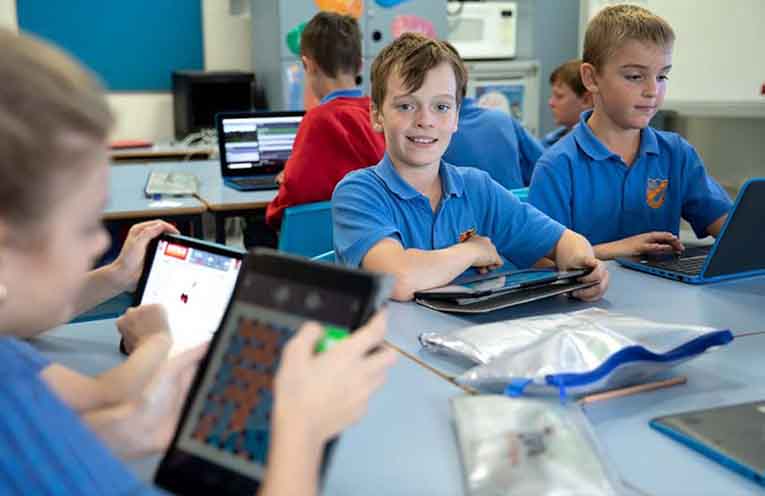
BRING your own device (BYOD) requirements in NSW public primary schools will cease at the end of the 2026 public school term as the Government strives to improve educational outcomes and limit excessive screen use among young children.
The decision means parents with children attending public primary schools in 2027 will not be required to buy expensive laptops or tablets because of a school BYOD policy.
“Kids are spending too much time staring at screens both inside and outside class,” said Chris Minns, Premier of NSW.
“These changes mean they’ll be spending more time reading books, writing and learning the basics and parents won’t have to shell out for expensive devices.”
The Government will also provide books to children attending Kindergarten orientation at NSW public schools from 2027, encouraging a love of reading before they even start school.
“The evidence is clear that too much screen time is distracting kids from learning,” Mr Minns said.
“Just because technology is available doesn’t mean it has to replace what we know works, reading from books and writing.
“So we’re getting back to basics – putting books back in kids’ hands, pens on paper and making sure screens are only used when they actually help students learn.”
At public high schools, participation in BYOD programs will remain voluntary, with schools reminded that students cannot be required to bring their own devices and that alternatives must be available.
The changes come as research continues to raise concerns about excessive screen use and its impact on student learning.
A recent Macquarie University report undertaken through the Minns Labor Government’s Screen Use and Addiction Research Fund found that screens can be a major source of distraction for students, with 84% of high school students and 57% of primary school students reporting they were distracted when using screens in class.
According to the OECD’s Programme for International Student Assessment, Australian students are nearly twice as likely to spend more than 2 hours per day using digital devices for learning as the OECD average, while academic results are falling.
This change aligns with the NSW Government’s new screen use guidelines, which will see public schools place limits on the amount of time students spend learning on individual devices which will be recommended from Day 1, Term 1, 2027 and mandatory from 2028.
This also builds on the changes that have been made by the Minns Labor Government to return to supervised assessments using pen and paper which reduce students’ opportunity and incentive to rely on detrimental AI inside classrooms, and at home.
“Learning to write by hand is important for brain development and recall, reading from paper is better for the eyes and brain, talking with teachers and classmates helps learning in ways that aren’t available through a screen,” said Prue Car, the Deputy Premier for NSW and Minister for Education and Early Learning.
“We want to improve learning and behavioural outcomes, which means less screen time. By removing this classroom distraction, we can also relieve some financial pressure on families heading into Christmas.”
The new screen use guidelines recognise that students benefit from limits to digital device use. Technology should only be used where it supports learning, rather than being the default, including for homework.
These guidelines will limit screen-use from an average of 15 minutes a day for K–2 to 45 minutes for Years 5–6, a quarter of weekly lesson time for Years 7–10 and half for Years 11–12, with exemptions and adjustments for disability or additional needs and subjects where screens are essential to learning.
Parents should expect to see children completing homework offline in the majority of cases, with no screen-based homework before Year 5. From Year 5 onwards, screen-based homework should only be assigned where it is more effective for learning than the alternative. This will mark a significant shift in the amount of time students spend online, both at school and at home.
BYOD arrangements in NSW public schools from 2027:
- No primary school will require students to bring their own device through a BYOD program
- Secondary schools will be reminded that BYOD programs are voluntary and recommended screen maximums mean significantly reduced use of devices in the classroom with off-screen learning options to be provided for students
- BYOD use will be monitored and evaluated throughout 2027 to inform future policy direction
- While digital literacy remains an important part of the curriculum, students will use school-supplied technology where it provides educational value.
These reforms build on the Government’s work to rebuild public education by getting more teachers in front of classrooms and a record school building and upgrades program so that students have access to a world class education.
This includes abolishing the wages cap and delivering NSW teachers the biggest pay rise in a generation, which has driven down teacher vacancies to their lowest level in 12 years, resulting in the number of merged and cancelled classes in NSW halving.
This comes as the NSW Government continues to deliver 260 new and major upgraded schools and preschools, adding more than 3,200 new classrooms for growing communities.