
Part 3: See earlier editions of NOTA for Parts 1 and 2.
“In 1945, my first year in the Narrowgut Crew, I earned £450 in two months. That was a lot of money for a young bloke,” said Ken Barry.
“Did you ever come face-to-face with a great white shark?” I quizzed
“Probably have,” replied Ken. “Nowadays if anyone sees a shark it always is a great white. In my time a shark was a shark we never bothered what type it was.
“They would all eat your fish and bite your leg, so it didn’t matter what type it was.
“On one occasion, all the boats were loaded with fish and had left for Nelson Bay leaving dad, Ken Sproule and I on the beach in the corner of the island. After the boats had left we caught another 30 boxes of beautiful bream. I had to run up to the light house and telephone the Fishermen’s Cooperative for them to send back a boat to pick up the fish.
“When the fish were loaded the three of us walked wearily back to Fingal along the beach in the dark. It was the 8th of May, 1945.
“The strangest thing happened.
“All of a sudden, all the lights in Newcastle were turned on and there was a mighty glow in the sky. We learned when we got home that the war had ended in Europe and the whole country was celebrating.”
Ken Barry’s ability to recall past events with unerring accuracy continued to amaze me. The finest detail was remembered – dates, times and birthdays. Births, deaths and marriages rolled off his tongue without taking time to ponder.
“The Smith family were the light keepers at the time and each day one of them would come over with a little order for groceries or other supplies from the mainland,” he said.
“This order was filled by the fishermen and taken to the light when they returned next time.
“I remember the light keeper Smith. His daughter Margaret married fisherman Ronny Tarrant.”
“Did you ever set a net in the Grit Hole?” I asked.
“Yes! Lots of times – luderick and bream. On the top of the tide we would run a net around the hole and pour petrol on the surface of the water. Add a match and Kaboom! The terrified fish would scatter and get caught in the net.
“Funny thing, we could set the water on fire but I tried to set the island on fire hundreds of times but it wouldn’t burn.
When we would sit up on the hill looking for fish the trees continued to grow across where we looked down onto the water.
“Every attempt I made to burn a clearing failed. The only time I saw it burn was from the sparks that blew across the bay from bushfires on the mainland.
“I had no memory of bitou bush, which is now strangling the island. There were lantana, gladioli, oleander and common lemons all over the island. Fishermen had a habit of planting lemon trees wherever they set up camp. You can’t eat fish without a lemon.”
“Can you recall any other outstanding incidents that occurred on the island?” I asked Ken.
“Not really, there seemed to be some sort of an incident every day. After a while they just become part of life,” Ken said.
“Oh, there was a day – 20th May 1955 – there was a really big sea rolling from the south.”
As was the case during the travelling season, when the mullet, luderick and bream were on the move, the fishermen would leave their boats on the other side of the Spit in the corner of the beach. They would pull them up onto dry sand above high tide and leave them until next time.
It was calculated by Jack Barry that the boats were not high enough and that the sea would reach them. Ken, his dad and George Shelly decided to walk around the beach, cross the Spit, and drag the working boats up onto higher ground.
When the heavy boats were pulled up to safety, the three fishermen started their walk back home. The tide had risen and the sea was raging and surging across the spit. George got across safely but Ken’s dad Jack was washed over the edge and into trouble.
Ken raced to his aid and just managed to pull his dad to the safety of shallow water but the powerful current dragged young Ken out to sea.
For three hours Ken was washed around in turbulent water until finally rescued by the trawler ‘Pop’s Last’.
The sea was huge, however Bobby Tarrant, Crofton and Athol Sproule, Herb Williams and Bernie Thompson, who all crewed the trawler, knew that they were Ken’s only hope.
The hardy fishermen steamed at full speed through the heads and out into the rolling sea. The men searched between the waves, realising that time could not be wasted.
“There he is,” someone yelled.
The fishermen hauled young Ken from the sea and took him back to Nelson Bay.
“I had to play football for Maitland next day and I couldn’t get out of a trot. Oh, and I lost my hat,” remembered Ken.
Changing the topic, Ken moved on.
“After a big sea we would find all sorts of things washed up on shore,” he said.
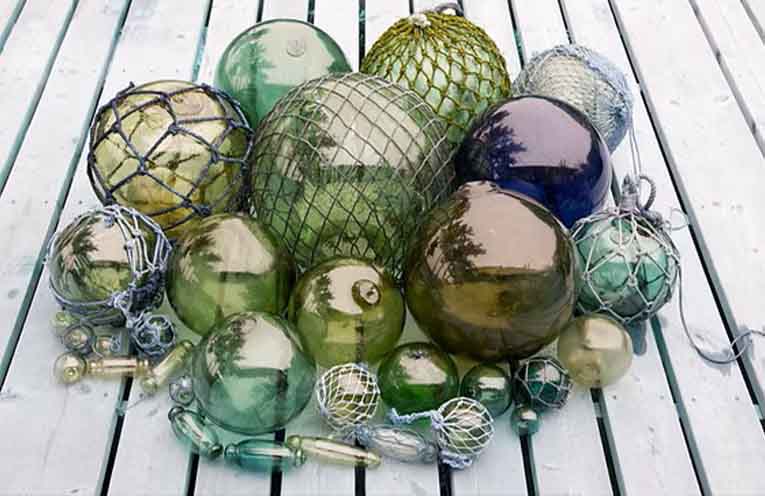
“I collected a shed full of big glass buoys, maybe from Japanese long lines. I’m told they are worth a small fortune today. I gave them all away, hundreds of them.”
By John ‘Stinker’ CLARKE