
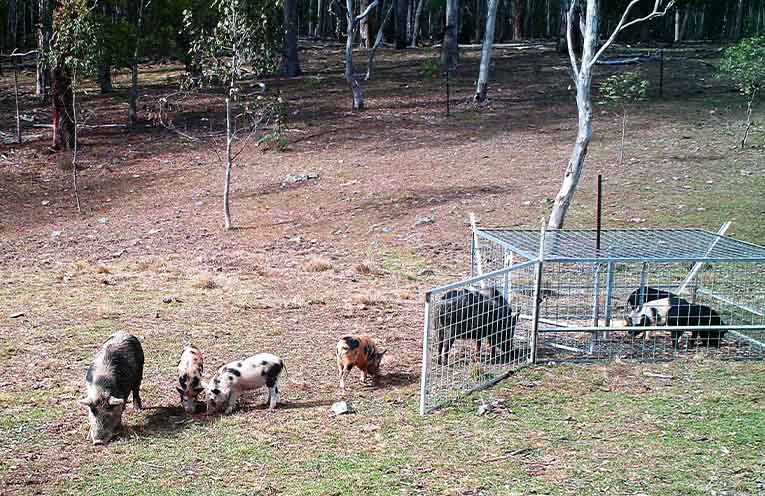
WITH dry seasonal conditions being experienced in many parts of the region, Hunter Local Land Services (LLS) is urging producers to act early on feral pig control.
As feed and water become limited, feral pigs are concentrating around remaining resources, increasing the risk of damage to crops, pastures and infrastructure, and putting additional pressure on livestock production systems.
Hunter LLS biosecurity staff say these seasonal conditions create a critical window for control programs, where well-planned action can deliver stronger results.
Luke Booth, Team Leader for Invasive Pests for Hunter LLS said, “We are working with landholders to deliver large-scale control across priority areas.
“This includes the distribution of free grain to support baiting and trapping programs, supply of traps, the deployment of dedicated feral pig control contractors, coordinated ground baiting programs and targeted aerial shooting operations.”
To stay ahead of population growth, landholders are encouraged to take a strategic approach that combines multiple control methods and aligns with seasonal conditions and farm operations.
Effective programs typically include:
- using free feeding to establish consistent feeding patterns prior to control activities
- selecting appropriate trap types and locations based on feral pig behaviour and movement
- combining control methods such as trapping, baiting and shooting to increase effectiveness
- following up initial control within three months to maintain pressure on populations
- coordinating control programs with neighbours to maximise impact across the landscape.
Feral pigs are highly adaptable and reproduce rapidly, making ongoing control essential.
A single sow can produce up to two litters per year, with as many as 10–12 piglets per litter, allowing populations to recover quickly if control efforts are not sustained.
Sows can breed as early as six months in favourable conditions.
“Continued control is critical to further suppress populations, particularly as pigs become more exposed and vulnerable due to reduced food availability and limited ground cover,” Luke said.
Conducting control programs ahead of key production periods, such as crop establishment, can help reduce production losses and protect valuable inputs.
Feral pig control also helps protect biodiversity and reduce biosecurity risks, with feral pigs capable of damaging native habitats and spreading weeds, parasites and diseases.
Local Land Services is supporting landholders through the NSW Government’s Feral Pig and Pest Program 2025–26, which provides access to practical tools and resources to improve control outcomes.
Landholders are encouraged to seek advice to ensure control programs are well planned and compliant with requirements.
For more information or tailored advice, contact your local biosecurity officer on 1300 795 299 or visit the Local Land Services website.