
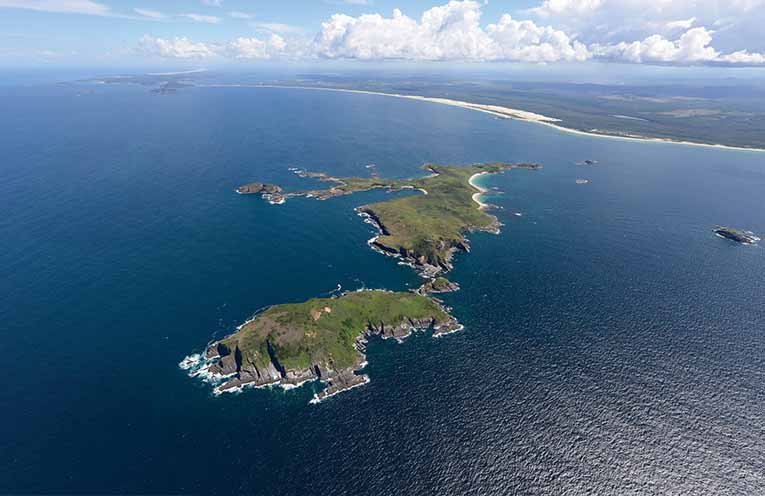
I AM continually amazed that so many residents of Port Stephens are yet to visit Broughton Island.
I recently returned from a few days, fishing, swimming and wandering around the island, which I believe to be a ‘jewel in the crown’ of this beautiful region.
Despite the many times I have visited the island and carried out research, I still feel that there are so many questions unanswered.
The island holds many secrets – from the Worimi, Greek, Italian, Chinese, French and pioneer commercial fishermen who, at times, have called the island home.
The rock structures are baffling and I continue to ask myself – why is the island treeless?
An account of the island’s history can be found in my book, ‘Broughton Islanders’, which was first printed in 2009.
My hottest spots on Broughton Island:
COD ROCK
Cod Rock is one of the most- popular snapper spots around the island. “Coddie” refers more to a reef system rather than a particular rock. The jagged structure, which can easily be picked up by a sounder, is ideal habitat for snapper.
I anchor and berley on sundown, preferably in a north-easterly breeze.
Floating a big prawn, fresh fillet of slimy mackerel or bonito on a 20lb line and 6/0 hook it is only a matter of time before a snapper takes notice.
EAST HEAD
For those who prefer to toss plastics, the drift along the East Head cliff face is perfect, particularly if there is some westerly in the breeze. The most action occurs towards the most-easterly point of the headland where there is an increase in white water activity. Snapper, mulloway and kingfish can all be caught on this drift.
As a Marine Park restriction, bait cannot be used in this area.
THE GUTZ
Snapper country between the main island and North Island. The same game plan as for East Head if you intend to use plastics. A steady westerly will push you along the inside wall of North Island. You do have the option of anchoring and floating baits down a berley trail.
NORTH BEACH
A cracker whiting and dusky flathead beach over the summer months. Best closer to the rocks where sand and rocks meet. Worms will do the job on whiting while pilchards on a gang of 3×4/0 or plastics will account for the flathead. Bring the worms to the island as they cannot be caught off any of the beaches.
By John ‘Stinker’ CLARKE