
RECENT reports of shark attacks along the NSW coast have made many holidaymakers nervous about going back into the water.
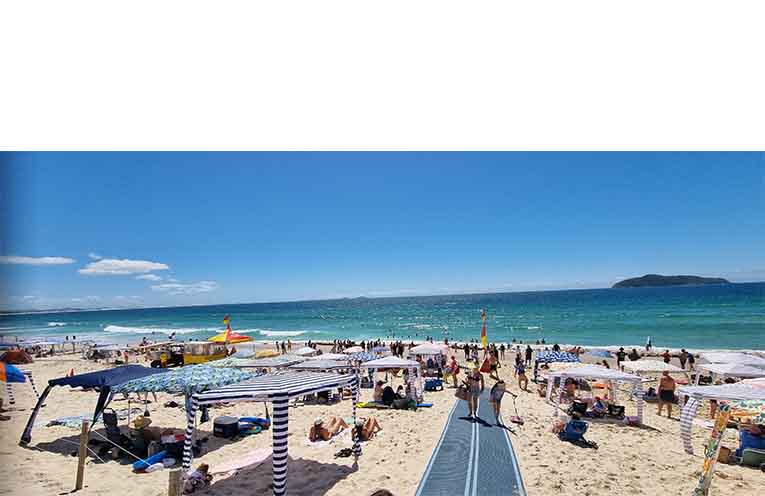
At Hawks Nest’s Bennetts Beach, the first good beach day following several days of hazy weather, seaweed and strong nor-easterly winds came with a sense of caution.

While the beach was busy, with families setting up umbrellas, cabanas and towels close together, only a small number of people went swimming, and most stayed close to the shore.
The concern is understandable.
Four shark attacks were reported within 48 hours, three in Sydney and one near Port Macquarie, with reports also emerging of a child missing near Old Bar.
Although the Myall Coast sits between several of these locations, the situation is more complex than it may first appear, and local conditions play an important role in beach safety.
Tea Gardens Hawks Nest Surf Life Saving Club (TGHNSLSC) Education Officer Nat Skelly told News Of The Area, “Shark attacks happen quite rarely, but when they do, the media makes a big deal of it, so everyone reacts as you would expect.”
“Nippers’ parents are understandably worried, but we exercise the utmost vigilance, including evacuation and lost-child protocols already practiced and in place, and we also have [drones] on duty, including training for volunteer pilots while the kids are near the water.”
TGHNSLSC’s shark protocols are also clear and well-practiced.
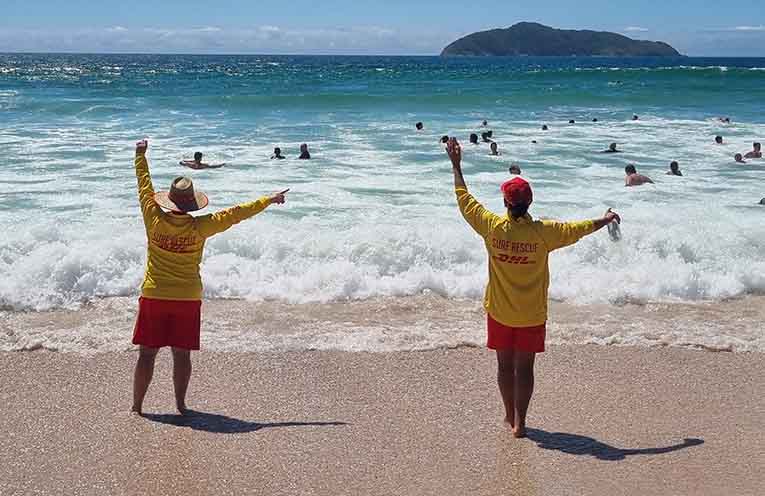
Protocols include loud speakers on the highly visible lifesavers’ “pie cart” to broadcast warnings, lifesavers line up on the beach to make the warnings visible, and Inflatable Rescue Boats and jetskis are launched to pull people out of the water.
The real cause of recent shark activity near the coast has been laid at the foot of the recent rains, which have seen larger-than-usual amounts of nutrients wash into the estuaries and river mouths.
Rain can attract fish and small sea creatures, which in turn draws sharks closer to shore to feed.
The Sydney attacks were at Vaucluse’ Shark Beach and Manly’s North Steyne beach, both areas where heavy rainfalls flush out densely populated suburbia into the harbour or the sea.
The Port Macquarie and Old Bar events happened within significant proximity of the Manning and Hastings river mouths, respectively.
The standard-issue warning is to avoid entering the beaches’ waters in the days after a heavy rainfall, any time there are murky or turbid waters, at dawn and dusk, and generally near river mouths.
It is recommended that swimmers give it 24 hours after a major rainfall on open beaches and 72 hours in harbours and bays.
By Thomas O’KEEFE