
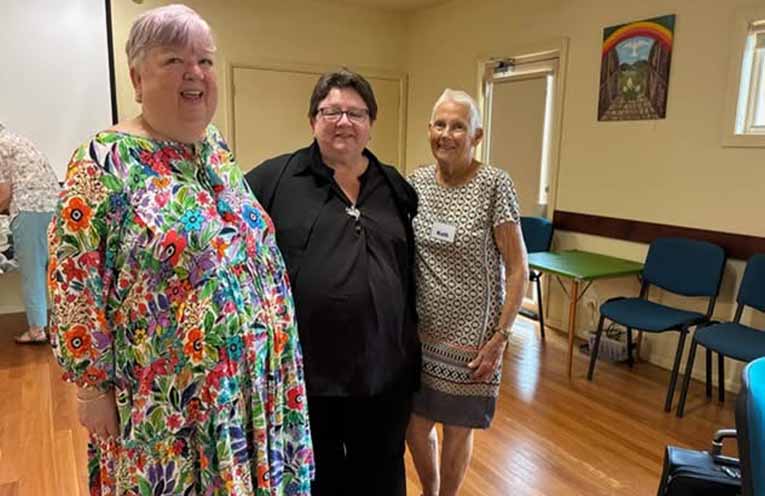
DEMENTIA Australia joined with several members of the local community for a support and information morning tea at St Stephens Catholic Church Hall in Tea Gardens on Monday, 12 October.
Annette Noffke, from Dementia Australia, led the morning tea, providing plenty of opportunity to ask questions and discuss the experience of people with dementia, and of those caring for them.
The session was aimed at teaching carers how to better understand the range of dementia behaviours.
“Dementia is a collection of symptoms caused by several diseases affecting the brain,” Ms Noffke said.
“Common diseases include Alzheimer’s Disease, vascular dementia, frontotemporal dementia, and Lewy body dementia, which cause a progressive decline in a person’s thinking skills including their memory, language and problem-solving abilities.”
Perhaps one of the most pertinent points was: “dementia is not a normal part of ageing”.
The human brain is the single most-complex part of human anatomy, and while the physical aspects are known well enough, concepts such as the nature of consciousness and exactly how memories are stored and retrieved remain elusive to modern medicine and science.
In the UK, the Human Connectome Project was begun in 2010 by the National Institutes of Health to attempt a mapping of the structural and functional pathways of the brain, and the project is ongoing.
In the home, where carers live and work with those experiencing dementia, things have to be more practical, including understanding dementia-related behaviours and the changes that occur.
“When you have memory changes, you can have difficulty with daily tasks, such as confusion with time and location, problems funding the right word, problems losing things, and changes in mood and behaviour,” Ms Noffke said.
“Outside the home, [people with dementia] may experience problems handling money, and difficulty judging danger.”
Risk reduction focuses on brain health, which means creating and maintaining a healthier mind, body and heart.
According to Dementia Australia, dementia is not inevitable: up to 45 per cent of cases are avoidable.
A handy factsheet is available through its website. It lists more than a dozen simple preventative actions, including quitting smoking, protecting your hearing, eating healthily and watching blood pressure, avoiding social isolation, and reducing alcohol intake.
A regular dementia support group runs every fourth Monday of the month at Tea Gardens Library, from 10am to 12pm.
It is convened by dementia support specialist Katherine Medic, who provides information and carer supports.
She is available to speak privately with local carers after the group finishes.
The National Dementia Helpline is 1800 100 500.
By Thomas O’KEEFE