
Share via:
AUSTRALIA’S maritime history is a constant source of remarkable stories of vessels that sailed our waters – and beyond – over two and a half centuries.
Many were the pack horses of the sea, ferrying timber, coal and other goods along our coastline.
Their work done, some ‘retired’ quietly, while others came to grief on some fatal shore.
Some, unexpectedly, had more interesting ‘lives’, venturing far – even into war.
A call from Tomaree Museum Association for shipwreck artefacts prompted Anne Johnson, a member of Tea Gardens Family Research & Local History Group Inc, to recall the story of a shipwreck involving her family.
Anne takes up the story…
My great-grandfather William Forbes was a ship’s captain from Dundee, Scotland.
He married Helen Butterfield from Cambridge, England in 1859 at the Scots Church, Sydney. In 1862 they were one of the first families to settle at Swansea, where they raised four sons and one daughter, my grandmother Helen, who later retired to Tea Gardens.
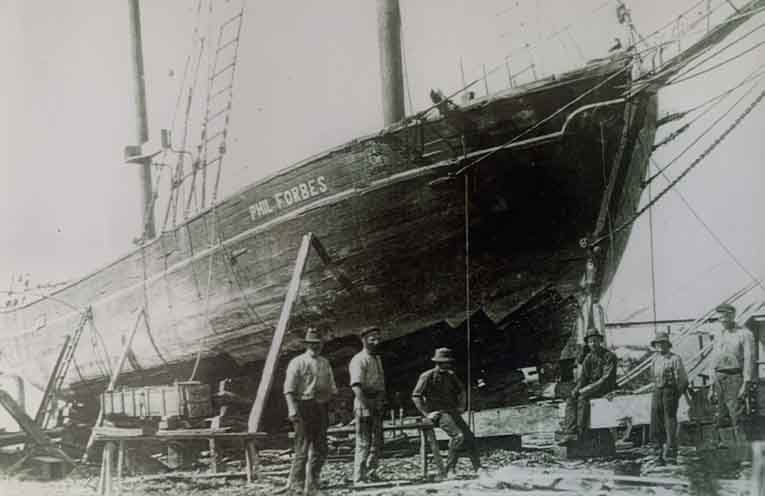
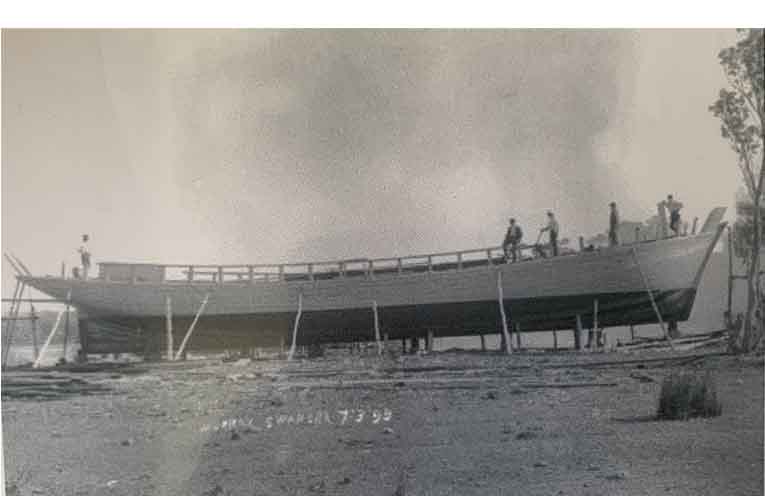
The boys became boat builders. One of their boats, the ‘Phil Forbes’, a vessel of 100 tons, was built in 1899 in the Swansea area.
She was bought by The Port Stephens Firebrick Company, but because of her ocean-going capabilities, the Engel family later purchased her to carry timber to Sydney and coal from Newcastle back to Tea Gardens, where it was stored in the coal bunkers on the riverside opposite their store.
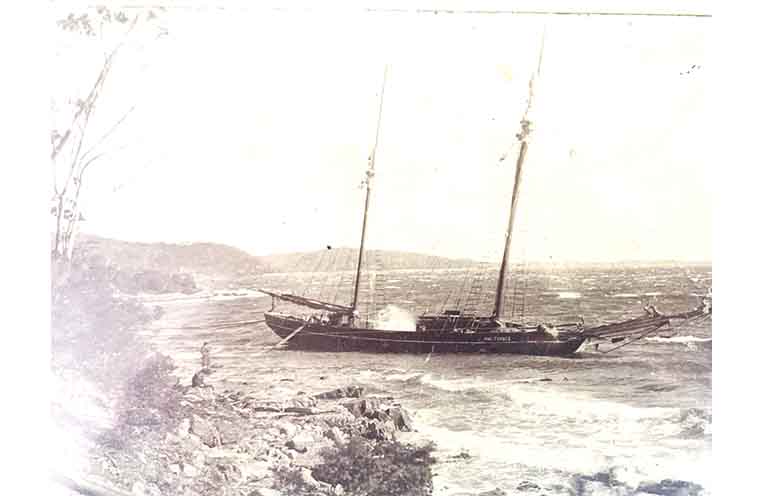
Unfortunately, the Phil Forbes was wrecked at Esmerelda Bay on Broughton Island in 1922.
Some of the locally built trading vessels ended up serving the armed forces.
In 1912, the last boat built at Swansea by the Forbes brothers was commissioned by Helen and appropriately named ‘Forbes Brothers’.
Two years later, it was requisitioned by the army and sent to Melbourne.
In 1938 she was lengthened and renamed ‘Leprena’ before being requisitioned once more for service in World War II with the United States Army Small Ships Section, supporting operations in New Guinea against Japanese forces.
One of the Forbes brothers, Ernie, later lived in Tea Gardens and was asked by the Engels’ to supervise the building of the ‘Coweambah’ on Witt Island.
Completed by Mr Burrows and his team in 1919, the Coweambah carried passengers to Newcastle twice a week, along with merchandise for Engels’ general store.
Due to the threat of Japanese invasion, the Coweambah too was requisitioned by the Commonwealth Government. In 1943 she was transferred to the US Army Small Ships Section in Sydney to ferry stores from US Liberty ships into bays and inlets in New Guinea.
Her duties over, ‘The Cowie’ was returning home in June,1945 when cyclonic weather forced her to take shelter in Trial Bay, where she became wrecked.
– Anne Johnson
You can help your local paper.
Make a small once-off, or (if you can) a regular donation.
We are an independent family owned business and our newspapers are free to collect and our news stories are free online.
Help support us into the future.
Share via: