
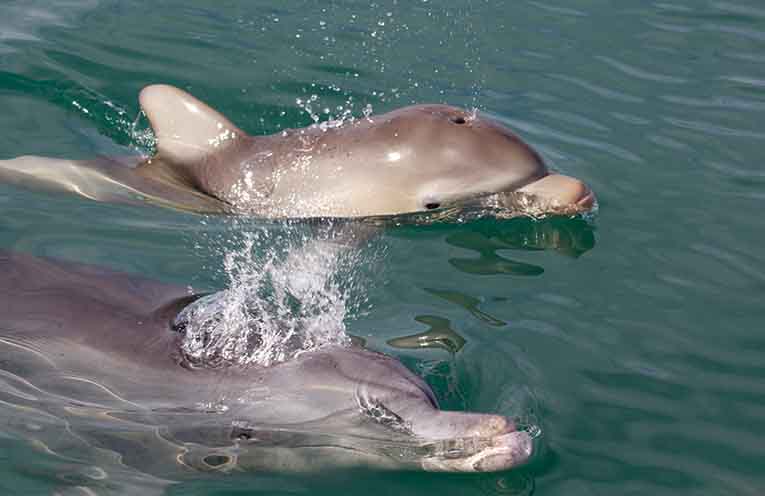
NEW research shows male bottlenose dolphins with strong friendships age more slowly than their solitary peers.
The University of NSW (UNSW) study is the first to reveal that social bonds in non-human species can slow ageing at the cellular level.
Lead author Dr Livia Gerber conducted the study and now works at CSIRO’s National Research Collections Australia.
“We knew social bonds helped animals live longer, but this is the first time we’ve shown they affect the ageing process.”
Dolphins, like humans, experience age-related changes: reduced energy, wear to the skin, slower movement and fading eyesight.
But UNSW scientists say they also have access to a powerful, natural anti-ageing serum – their friends.
Dolphin friendships can last decades. They surf waves together, rest side-by-side and build deep, stable alliances that look remarkably like human relationships.
The alternative – hunting alone, competing for mates without support, and facing predators solo – leads to a more stressful life, and stress, much like in humans, is a key driver of ageing.
Analysing skin samples from a well-studied dolphin population in Shark Bay, Western Australia, researchers found males with stronger, tighter social networks showed slower biological ageing.
“The health benefits of friendship are not unique to humans, but a fundamental biological principle across social mammals,” Dr Gerber says.
“Social needs are biological needs.”
Dr Gerber hopes to see similar studies in elephants, primates, wolves and other highly social species.
“I predict we’ll find that friendship is a natural anti-ageing secret across social animals.”