
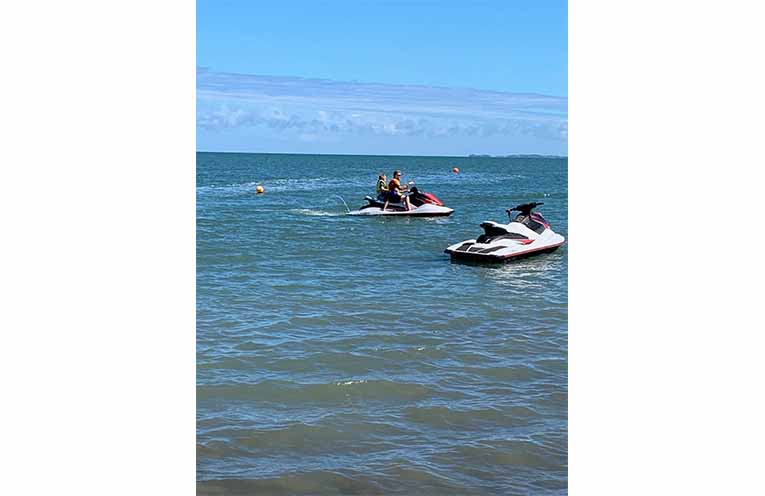
THE message from maritime authorities this summer was clear: slow down, stay alert and respect the rules as a statewide compliance crackdown puts jet ski safety firmly in the spotlight.
Operation Cool Your Jets, a week-long joint campaign led by NSW Maritime and NSW Police Marine Area Command, aimed at reducing risky behaviour and keeping waterways safe for everyone during the busy holiday period.
NSW Maritime Boating Safety Officers carried out nearly 2,200 vessel safety checks, including around 753 on jet skis on 3-4 January.
Patrols focused on high-traffic waterways such as Port Stephens, Botany Bay, Lake Macquarie, Lake Illawarra, Jervis Bay and the Murray River.
Officers issued 74 penalty notices and 214 official warnings, with more than one-third of enforcement action linked to jet skis.
The most common offences related to lifejackets, safety equipment and speeding.
Jet ski use continues to rise across the state, with more than 92,000 riders now licensed in NSW, representing a 23 per cent increase over five years.
Education officers also spoke directly with 980 people during the operation to reinforce safety messages.
“There have been 11 incidents involving jet skis in the past 12 months, including one fatality,” NSW Maritime Principal Manager and Operation Cool Your Jets Coordinator Sonia McKay said.
“These machines are powerful and fast.
“We want people to enjoy our amazing waterways, but that means respecting the rules and looking out for others.
“Our officers are out 365 days a year and repeat offenders will face tougher consequences because reckless riding puts lives at risk.”
NSW Police Marine Area Command Acting Superintendent David Carlin said patrols would continue throughout summer.
“Although the vast majority of jet ski riders follow the rules, a small number of people cause problems and reckless behaviour will not be tolerated,” he said.
“Riding a jet ski close to swimmers or other vessels is very dangerous and we encourage the community to report any menacing behaviour.”
Vessel-free zones
Authorities are also trialling powered watercraft restriction zones at Port Stephens and have installed CCTV cameras at key locations to support live monitoring and rapid response.
The trial will temporarily restrict access for powered vessels, including personal watercraft such as jet skis, in areas identified as having higher safety risks or heavy use by swimmers and paddlers.
The initiative responds to ongoing community concerns and aims to support safer and more enjoyable experiences for all water users.
Transport for NSW said Port Stephens is one of the busiest waterways in New South Wales during summer, with increased boating activity coinciding with peak holiday visitation.
By separating powered and non-powered activities in targeted locations, authorities hope to reduce the likelihood of incidents and conflicts on the water.
The trial will operate until 26 January and will be supported by clear signage, on-water education and cross-agency collaboration.
Three trial locations have been selected based on safety data and community feedback.
At Dutchmans Beach, a 185-metre-long zone will be established on the eastern side of the beach.
At Nelson Bay Beach near Fly Point, a 230-metre-long zone will extend in a south-west direction to a pumping station located midway along the beach.
And a third zone has been introduced at Shoal Bay, covering a 430-metre-long area westward from the jetty to the pedestrian crossing.
In all three locations, powered vessels will be required to remain more than 30 metres from the shoreline.