
THE Mid North Coast has recorded another positive test result for the deadly H5 bird flu virus in one of five new detections announced today across NSW.
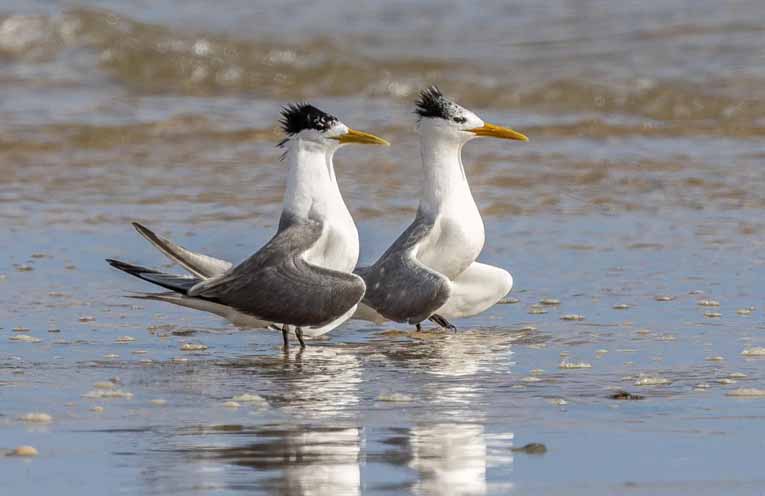
Locally, positive test results were all returned from samples of terns and included birds at Bonny Hills, in the Camden Haven; Boomerang Beach, on the Mid North Coast; and at Coffs Harbour’s Jetty Beach.
Detections were also made in a tern at Booker Bay, on the Central Coast, and a silver gull on Barunguba Montague Island on the Far South Coast.
“It is terrible H5 bird flu has reached Barunguba Montague Island, which is home to many bird species and marine mammals. We will work with the tourism industry to minimise the impacts on tours of the island,” said Federal Minister for the Environment Penny Sharpe.
“The NSW Government will continue the H5 bird flu vaccination program on Barunguba, as well as in other key populations, as we try to protect our native species.”
In response to the detection on Barunguba Montague Island, the NSW Government is contacting tourism operators about temporary changes to some access and activities, to support public safety and biosecurity.
Surveillance is continuing across the state so any further cases can be detected early.
These new events take NSW to a total of 45 H5 bird flu events, and a total of 542 across Australia.
The NSW Government advises that most detections have been in various species of terns, most likely because they often gather in large groups, making it easier for bird flu to spread between birds.
A national surveillance plan is in operation to monitor for any further detections and facilitate rapid, coordinated response.
Bird flu has not been detected in commercial poultry flocks or captive birds and the risk to human health remains low.
The Government says the detection events are not unexpected, and that it is well-prepared for H5 bird flu.
The Chief Veterinary Officer has advised the poultry industry that at this stage there is a housing recommendation for poultry.
The NSW Government is reminding people with backyard poultry and pet birds to:
- maintain clean housing for birds
- provide clean, chlorinated domestic water and keep birds away from natural water sources
- limit wild bird contact and place food and water inside shelters
- quarantine new birds.
Dog and cat owners should also undertake basic biosecurity measures such as:
- keeping dogs on a leash in wildlife areas where birds are found
- keeping cats indoors or in secure enclosures
- reducing contact between pets and wildlife
- washing your hands with soap and water before and after handling birds or other animals.
The Government is continuing to receive many calls and online reports to the Emergency Animal Disease hotline and wildlife organisations, councils and other organisations are being briefed regularly on the situation.
The NSW Government continues to work closely with Australian and State and Territory governments to roll out plans developed with industry, agriculture and wildlife organisations.
If you see sick or dead wild birds, domestic birds, marine mammals or other wildlife showing signs of H5 bird flu – AVOID contact, RECORD what you see, REPORT it via the online reporting form or Emergency Animal Disease Hotline – 1800 675 888.
“I thank the many community members who have reported sick and dead wildlife to the Emergency Animal Disease Hotline or reported it through the online form,” said Tara Moriarty, the Minister for Agriculture, Regional NSW and Western NSW.
“Their continued vigilance is helping us detect cases early and respond appropriately.”
For more information about H5 bird flu visit the NSW Government’s dedicated webpage: Bird Flu (H5 avian influenza).
“NSW is well-prepared to respond, and we will continue to closely monitor the situation,” Ms Moriarty said.
“Early reporting remains one of our best tools for tracking disease activity and protecting the health of wildlife, poultry and other animals across the state.’