
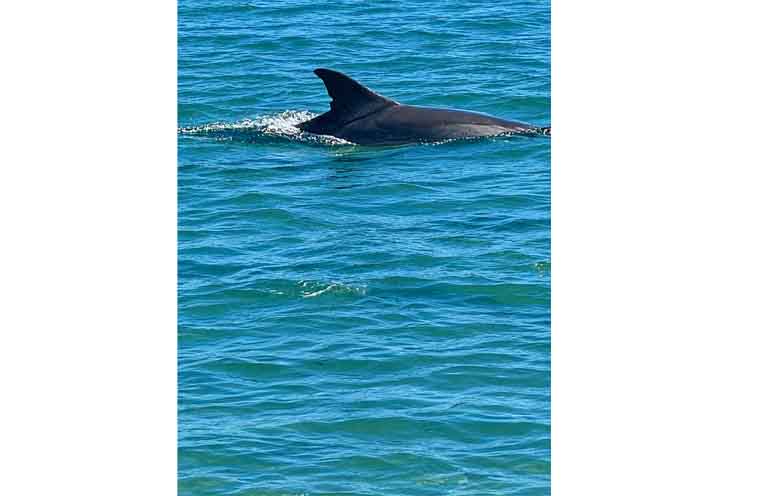
VOLUNTEERS counted just 21 Indo-Pacific bottlenose dolphins in Port Stephens’ 2026 annual dolphin census on Sunday, 15 November.
The census asks volunteers to spend an hour at different spots around the bay and record the dolphins they see.
The National Parks and Wildlife Service started the census in 2001 and ran it until 2010. The Marine Parks Association took over in 2014 and ran it until 2019, after which COVID interrupted the count.
The 2019 census recorded 120 dolphins, the highest count since 2010. The Organisation for the Rescue and Research of Cetaceans in Australia (ORRCA) has run the census since 2024, when 42 dolphins were recorded, followed by 24 in 2025 and 21 this year. An analysis of data from 2001 to 2015 found an average of 91 dolphin sightings per census.
The only in-depth study of these dolphins was undertaken by Macquarie University between 1997 and 2000. The study estimated that between 143 and 160 dolphins used Port Stephens at the time, depending on the season.
The recent counts, along with concerns raised by local dolphin-watching operators, have prompted EcoNetwork to look more closely at how many dolphins use the bay and what might be affecting them.
The group will use the same photo-identification method as the university study. A dolphin’s dorsal fin acts like a fingerprint, with a distinctive shape, colour and pattern of nicks, cuts and scrapes. These features allow researchers to identify individual dolphins and keep an accurate record of which animals have been seen in the bay and how many have been identified.
ORRCA volunteers will check new photos against a historical catalogue compiled by Lisa Skelton, who coordinated the census for the Marine Parks Association.
EcoNetwork will launch an app in December so the community can report dolphin sightings. The reports will help the group identify the parts of the bay and the habitats that dolphins and turtles use, assess the health of those habitats and investigate whether habitat health is linked to the status of the dolphin population.
EcoNetwork plans to hold a community forum in early December to introduce the project, explain how to use the app, and explain other ways they can help with the study.
By Althea GUINSBERG