
ON top of the looming bird flu epidemic, native birds are suffering from alleged incidents of poisoning, according to the NSW Environmental Protection Authority (EPA) and experts within volunteer groups.
The EPA released an undated notice of ‘alleged poisoning of native birds’ including magpies, brush turkeys, and butcherbirds in Tea Gardens earlier this year.

“It was initially suspected that the birds may have died from avian influenza, but all of the birds tested negative to the virus,” the EPA wrote.
“Further analysis revealed that all the birds were exposed to Methomyl, with very high concentrations detected in the gut contents of several birds.
“The results indicate that Methomyl poisoning is the primary cause of death.”
Methomyl is a registered insecticide used to control a wide range of agricultural and horticultural pests.
Most of the birds were also exposed to brodifacoum, a registered but tightly regulated anticoagulant rodenticide.
The report said all detections were in liver tissue rather than gut contents, suggesting longer-term exposure to residues (potentially through consumption of poisoned rodents) rather than acute direct poisoning.
The EPA reminds everyone that the misuse of pesticides is illegal, mainly because it can have ecological chain reactions including the unintended deaths of native birds that would normally feed upon the rodents or insects being targeted.
There are high penalties for anyone who wilfully or negligently misuses pesticides in a way that causes damage or harm to another person’s property, with a maximum of $60,000 for an individual or $120,000 for a corporation.
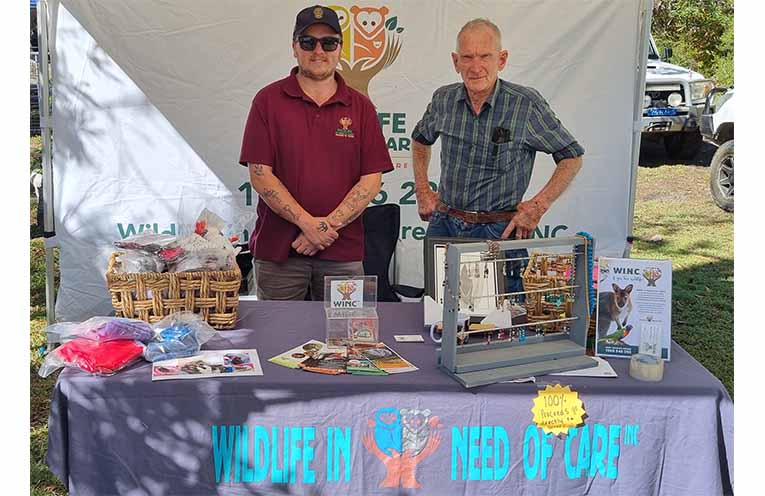
Sick and injured wildlife are recovered and cared for by a tireless team of 20-30 volunteers at Wildlife In Need of Care (WINC), who had a visible presence at last weekend’s Pindimar Markets.
Ben Burgess, the new fundraising co-ordinator for WINC, took the call announcing the first confirmed avian flu-infected giant petrel at Hawks Nest earlier this year.
He had some grim news for our local avians.
“The bird flu situation is about to get a lot worse, as a massive shearwater migration is due, bringing more of it our way,” Ben told NOTA.
“Bird flu symptoms include sitting unable to fly or move, appearing drunk and disoriented, but some birds can be asymptomatic for up to two weeks before anything seems wrong.”
WINC stresses that the public should not touch any wild bird they think may be infected.
Instead, they should call the Animal Disease Hotline on 1800-675-888 and report the type of bird, its symptoms, and a GPS location.
“Terns, pelicans and seagulls, mostly sea-birds, are most affected right now, but the flu has every chance of being able to cross species to humans, as it has with several dead sea mammals, predators and scavengers on land who would have fed on dead birds – even domesticated dogs might find one for a feed while walking,” Ben added.
“Some people have called WINC, sadly, after receiving the wrong information from other sources, who’ve told them to pick up the sick birds and put them into a box – please do NOT touch them.”
Touching dead birds needs correct PPE to safely dispose of them, and obtaining proper PPE to combat the ballooning bird flu epidemic costs money, which leaves WINC’s volunteer force, most of whom put in up to 30 hours per week, on top of full-time day jobs, out of pocket.
WINC will also accept donations of old towels, sheets and animal carriers that can be used to make injured animals more comfortable.
WINC covers Myall, Dungog, Clarence Town, Port Stephens, Medowie, RT, Karuah, into Stockton and Tomago, while the better-recognised WIRES is virtually everywhere else.
If you have any knowledge or information regarding the possible misuse of pesticides, you are encouraged to report this information to Environment Line on 131-555 or via email at info@epa.nsw.gov.au.
You can report anonymously, and information will remain confidential. Your information could assist the EPA in its investigation.
A report should include any records kept with the details of exactly what you saw and when.
Take photos or video recordings if possible and report the incident with urgency. Provide as much information as possible.
For further information on the EPA’s role and compliance information in relation to pesticides, please visit: https://www.epa.nsw.gov.au/your-environment/pesticides/preventing-pesticide-misuse
By Thomas O’KEEFE