
THERE has been a rapid decline in koala numbers in some areas of NSW, and even more koala habitat could be lost unless we change how we manage our land and support koala conservation, according to Caitlin Orr, MidCoast Council’s koala project officer.
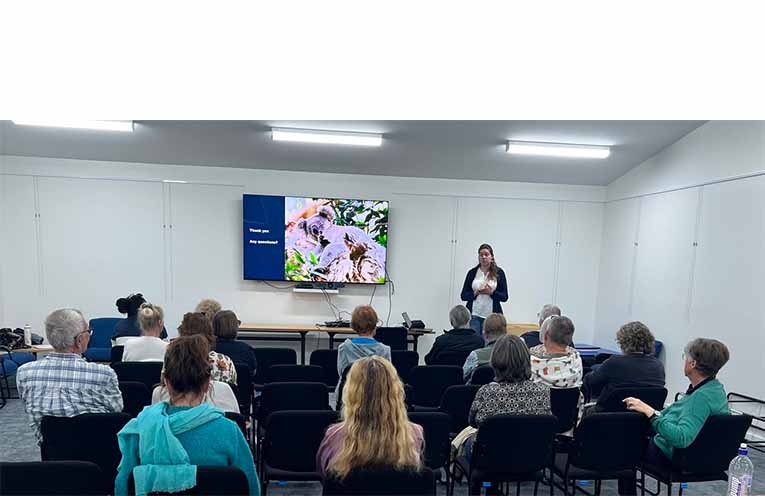
Ms Orr recently addressed the Myall Environment Group during a gathering on 29 August, 2026, at Tea Gardens Library.
She gave members an insight into the challenges facing koalas, with a particular focus on the MidCoast koala population and what was being done to protect it.
Ms Orr said that a major focus was protecting existing koala habitat and the corridors that connected it.
This included restricting land clearing in identified priority areas and creating new habitat by connecting fragmented landscapes with appropriate food trees, diverse vegetation and safe pathways for koalas to move through.
Restoring these corridors was equally important. Planting native koala food trees and removing weeds could reconnect fragmented forests and allow koalas to travel, feed and breed more safely.
Ms Orr said the best koala food trees to plant included Forest Red Gum, Tallowwood, Grey Gums and Swamp Mahogany.
She explained that koalas faced several serious threats, particularly when habitat was lost or fragmented.
Vehicle strikes could be reduced through wildlife fencing, underpasses, overpasses and warning signs in areas where koalas regularly crossed roads.
Domestic dogs were another significant threat, particularly in urban and semi-rural areas. Dog controls, community awareness and backyard fencing could all help keep koalas safe.
Drought and extreme heat also placed enormous stress on koalas. During very hot weather, koalas move down into the thickest, coolest parts of a tree.
In severe conditions, they could leave the safety of the tree altogether and seek refuge in hollows close to the ground. Unfortunately, this makes them vulnerable to dogs and other dangers.
Ms Orr also said that where koala habitat overlapped with grazing land, cattle could pose a serious risk by trampling koalas forced onto the ground by sudden habitat loss.
Fire and climate change were additional challenges, Ms Orr said. Increasing extreme weather events made proactive management of koala habitat and the wider landscape even more important for their long-term survival.
The audience also heard about the work of WIRES, which provides free wildlife tree water drinkers to eligible landowners in fire- and drought-affected areas through its Water for Wildlife project.
These initiatives, together with habitat restoration, can make an important difference during difficult conditions.
One of the most fascinating parts of Ms Orr’s presentation was learning about how koalas were being monitored and surveyed.
She explained that extensive surveys had been carried out across NSW, with around 7000km of land surveyed, producing some very positive results.
Technology was also helping: Detection dogs and drones were being used to locate and monitor koalas and better understand where they live.
Conservation wasn’t just the responsibility of councils and government agencies.
A particularly important part of Ms Orr’s role is working with private landholders to restore koala habitat through tree planting and weed control.
“Community education, engagement and participation are essential if we are going to protect our local koalas into the future,” she said.
Ms Orr’s overarching message was both sobering and encouraging.
There are real challenges ahead, but there is also a great deal that can be done when the government, landholders and the community work together.
Go online to read about MidCoast Council’s Koala Safe Spaces Program to learn more about koala conservation in our area.
Every tree planted, every corridor restored and every threat reduced can help give local koalas a safer future.