
Share via:
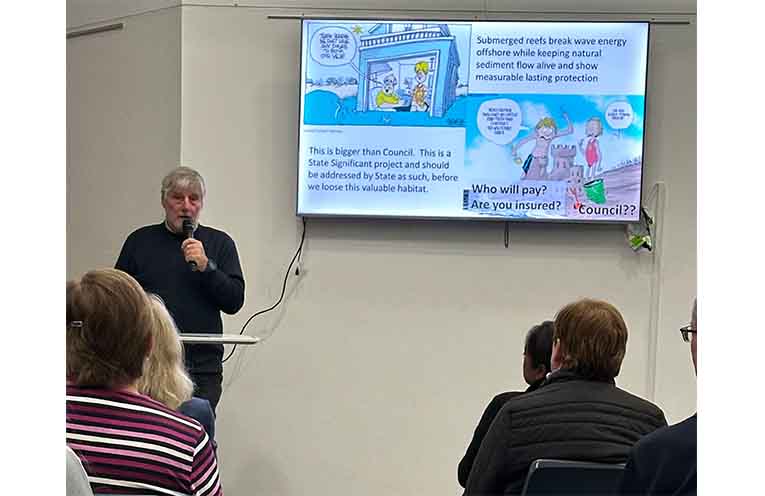
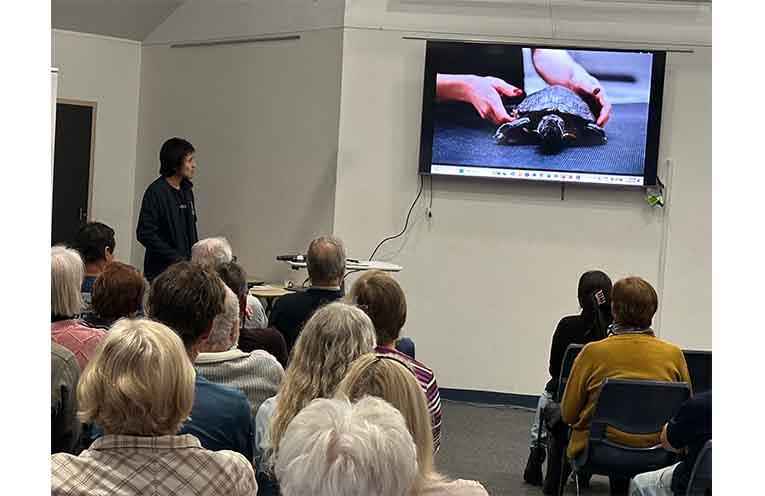
THE changing Port Stephens coastline and the health of its marine life were the focus of a National Science Week forum held at Tomaree Library on 23 August.
Hosted by the Port Stephens EcoNetwork, the forum brought together scientists to discuss coastal erosion, oyster reef restoration, kelp forests and the deaths of green sea turtles in the bay.
EcoNetwork president Iain Watt spoke about the increasing pressure on the Port Stephens coastline from rising sea levels and stronger storms.
He said sea levels had risen by about 10cm since 1993, with Nelson Bay now experiencing high tides where there was little or no dry beach.
Mr Watt also spoke about the different ways people have tried to protect the shoreline, including sandbags, rock walls and beach nourishment.
He said some of these methods could simply move the erosion problem further along the coast.
One possible solution discussed was the use of submerged reefs or breakwaters to reduce wave energy and help hold sand on beaches.
There was also some good news from Vicky Cole of the Port Stephens Fisheries Institute, who spoke about local oyster reef restoration.
Research has found rock-based reefs can be highly successful at attracting oysters, while the restored reefs provide habitat for fish.
Scientist Tom Davis, from the Port Stephens Fisheries Institute, explained that large amounts of freshwater entering the bay could cause problems for shallow kelp forests, with kelp particularly affected at depths of up to five metres.
The recovery of marine life can take months, with kelp, sponges and corals all affected by the changes.
The deaths of 79 green sea turtles in Port Stephens during 2025 were also discussed.
Irukandji Shark and Ray marine vet Dr Tom Tran said testing had not found one particular toxin or disease responsible.
Instead, a combination of factors, including changing salinity, increased sediment and cold winter temperatures, may have placed the turtles under too much stress.
The event gave the community an opportunity to hear directly from scientists about some of the changes happening in Port Stephens and the work being done to better understand and protect the bay.
By Althea GUINSBERG
You can help your local paper.
Make a small once-off, or (if you can) a regular donation.
We are an independent family owned business and our newspapers are free to collect and our news stories are free online.
Help support us into the future.
Share via: