
BEHIND the walls of Irukandji Shark and Ray Centre, the team at Sea Shelter are quietly continuing to write the rescue tales of the beloved Port Stephens turtles.
One turtle has become the heart of a story about the fragility and resilience of marine life, and the dedication of those who protect it.

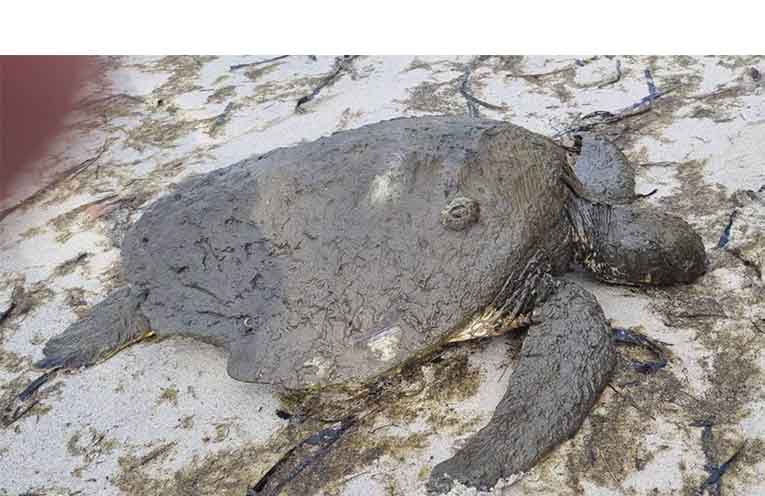
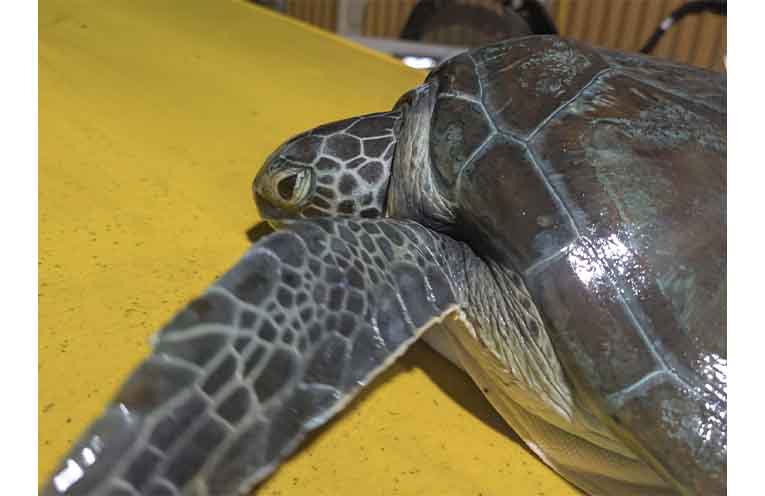
Spearow, a young green sea turtle named after a Pokémon character, was found in Tanilba Bay in critical condition and admitted to Sea Shelter on 8 September 2025.
The Sea Shelter team described her condition as confronting, with a severe infection causing the top layer of her scutes to become necrotic and slough away.
Following two months of treatment, Spearow is now eating well, steadily gaining weight, and has recently been moved into a larger rehabilitation pool in preparation for release.
The team said turtles found in a similar state to Spearow, are often severely immunosuppressed and dehydrated.
Many develop secondary aspiration pneumonia.
Veterinarian, Tom Tran advised to be on the lookout for abnormal behaviours in turtles, including “turtles that surface too frequently to breathe, signs of floating, and difficulty diving which may indicate loss of buoyancy control. “Excessive cover of barnacles and epibionts may indicate that a turtle is unwell since healthy ones normally are very fastidious in grooming themselves.”
Sea Shelter rescues turtles across Port Stephens for many reasons, often linked to flooding and cold weather that weaken immune systems and increase infection risk.
Poor water quality and parasites also contribute, along with occasional boat strikes, entanglement and fishing gear injuries.
Rehabilitation is complex and costly, with some turtles in care for up to 14 months.
Locals are encouraged to report environmental concerns, reduce plastic use, follow responsible fishing practices, and stay with distressed turtles until help arrives.
Tom emphasised, “the most important thing if possible is to stay with the turtle particularly when in water until the rescue organisation arrives.
“This action alone helps us tremendously as it almost becomes impossible to find the turtle even if we are provided with a general location due to water currents, or the turtle attempting to dive to get away.”
The team says that every successful rescue and release represents hope.
Tom explained that “in nature, odds for juvenile sea turtles to make it to adulthood sits at around 1/1000, all the less now with current anthropogenic pressures on them.
“However, any one of these successful releases could also go on to survive and produce thousands of eggs in their lifetime, so every individual really matters.
“Being in a cooler temperature area means we also observe a higher number of male individuals, meaning the survival of these turtles becomes critical due to warming temperatures in the north producing a higher number of female turtles.
“Many green sea turtles can take 30+ years to mature and are resilient in the right environment so I feel that it is an obligation and our duty to help make things right, since it is directly us and our impact on our environment causing them to become unwell.”
The first 24 to 48 hours of care are critical, focusing on stabilisation through pain relief, fluid therapy and targeted medications guided by diagnostic results.
Treatment requires specialised housing, heating, filtration, seafood diets and collected macroalgae, as well as advanced diagnostics such as CT scans and blood tests.
Community donations and volunteers are vital and each turtle returned to the ocean matters, for the future of the species.
By Jacie WHITFIELD